Wednesday, February 10, 2010

3. Kat Yang - T-Shirt Designs


I really enjoy corny jokes. Like: Why do clams not like to share? What did Tennessee? Wanna hear two short jokes and a long one?

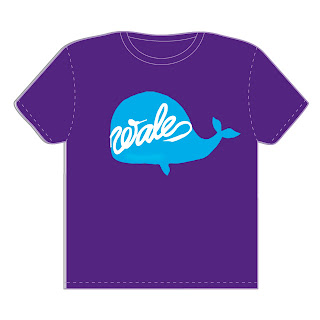
Anyway, a hint to this one if you don't get it: The punchline is a pun.


They keep sayin' whale, but my name Wale.

I was reading about rapper Wale in my friend's GQ magazine, and I embarrassingly asked my friend "Who's Whale?". I love that he raps about this mispronunciation since it makes me feel less bad that I am so out of touch with current music sometimes.

Also, I'm not sure what the t-shirt color would be for this. The design seemed too plain for a white-tshirt though. I was thinking a dark color or juxtaposing a color like red?


(front) (back)
For some reason, I like the idea of dinosaurs listening to music...there's just something that is so anachronistically incorrect about it. One of my friends also goes by the moniker DJ Stego[saurus], so I guess this would be DJ Brontosaurus? DJ Loch Ness Monster?

Tuesday, February 9, 2010

3 - Daniel Ton: T-Shirt Designs

I wanted my t-shirt designs to reflect my current day-to-day life. Breaking down the hours, I figured I spent most of my time (a) at home with my housemates, (b) in lab writing my thesis, and (c) at the GCB (Grad Center Bar).

(a) Housemates
Little Red is our nickname for our little red farmhouse.

(b) Bat lab

(c) GCB
I find these directions (from the GCB website) strangely appealing. It reminds me of a choose-your-own-adventure book.

03. Megan Estes. T-shirt inspiration.


When I started thinking about designing my t-shirt, all I had was a vague idea. I kept thinking about those “x-ray" shirts that show ribs or organs or muscles.

I started to wonder how I could make a shirt that communicated in a similar way. Like, “Oh, those are your ribs.” “Oh, it’s a tuxedo.” But more than that I wanted to see if there was a way to communicate a change of the entire body, rather than just changing a facet of that body, ie the tuxedo clothing, or seeing through skin.

What I wanted was, “Oh, you’re an apple.” “Oh, you’re a book.”

You are a ____.

I started thinking of objects and animals that have characteristic and identifiable qualities in the midsection, so that a t-shirt showing only the upper-middle part of that something would still be easily read by others.

Monday, February 8, 2010

Sunday, February 7, 2010

4 - Jonah Kagan: He Mends Hip Notes


I delivered the puzzle! We'll see if he can figure it out. Here's the back (click on it for better resolution):

I tried to make a simple visual hierarchy that would be aided by the unfolding of the puzzle. Reading the front and then folding it over to reveal the top corner would serve as a demo to how the rest of the puzzle was to be approached. Then, at the bottom, I added the final element - my email with a symmetrical design to the top corner to fill out the design and serve as a sort of anchor.

Thursday, February 4, 2010

2. Grace Watson -Business Card


Egypt has been on my mind since I started shopping this class, History of Egypt I, here at Brown. I've always had such a strong draw to the subject, but I've never indulged myself in actually pursuing it. It might seem a stretch as to something that captures my personality, especially since architecture and Egyptology so rarely come into play in what I actually study (biology), but the more I think about it, it makes sense: I've always wanted to travel there, mostly because I'm so fascinated with their culture and why ancient Egyptians did the things they did.
My card ties this "architecture" into modern life, which is so far removed from ancient times, but also very far removed from the mystery that is lost in all our technology. I don't know if a company that created secret passages in people's homes would actually be successful, especially right now- I mean, during an economic crisis, how many people are going to want a superfluous underground tunnel beneath their house? But I think that either way, it's nice to think that we can create our own secrets, and perhaps bring back some ancient mystery that has faded after all this time.
In terms of the card's aesthetic, there is definite room for improvement- I left the Egyptian to be the largest figure because I thought that it represented the physical "manpower" that built these pyramids and other monuments. And I liked how the colors popped.

2 - Leah Cogan - Business card fiasco...


After my anxiety attack of last Tuesday morning due to my battle with the computer, I resolved to set aside my stubborn nature and change my definition of art. You see, computers hate me. They just do. But that shouldn't exclude them from the realm of 'artistic expression'. Still, my incompetence with computers made such that I had to rely mostly on the hearty scanner at the Rock.

So here is my image. My alter ego is a genius singer/songwriter. Pretty nifty. The image expresses a serenity within a chaos of words and meanings; a through-line of deep concentration amidst broken lines. An offering. My information is not what is important. What I can offer is what's important.

I can't say that I conquered Photoshop...but I did my darndest!!!!

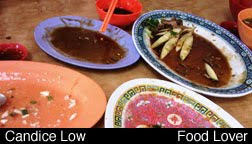
business card- candice low


This is a picture I took at one of my favourite eating places in Singapore. It's humble fare, it's so delicious my family has been eating there since before I can remember, and we never leave before cleaning off the plates. As the card says, I'm a food lover, and I always finish my food.

There's a Japanese tv show where a bunch of people are put in a restaurant and have to finish every item on the menu. I'd use this card to get on the show.

Wednesday, February 3, 2010

02. Megan Estes. Business Card.

I had some trouble deciding what I wanted to put on my card because I didn't know how I wanted to communicate myself to new people. I don't yet have a real job, and I don't want my identity to be "Student."

So I didn't make any references to occupation. I'm nothing yet except for myself, and that's all I really needed my card to say.

02 - Daniel Ton: Business Card


I wanted the business card to reflect my biology concentration, so I chose an animal tessellation by artist M.C. Escher for the background. As well as including lizards and fish, the repeating pattern includes bats, the subject of my lab and thesis. Hence, I desaturated the image save one bat, alluding to my academic focus.

Earlier version:


2. Michael Yanagisawa - Business Card

or alternatively


I can't say that I scuba dive, but I'd love to be able to, and be good enough at it to have a business card.

2: What is Art? Olivia Fagon


What is art? As Katie said, it resists classification. Art is artistic intent; the intention to make something a piece of art indicates that it is art. The act of designating something as art can be a collective decision ( e.g. unanimous acceptance that a painting is art) or an individual one (e.g. a Yale artists claiming her induced abortions are art). It’s a product of someone’s vision. Technique, emotion, aesthetics, color, senses, shape, line…etc. All these aspects of art and design ( though relevant ) often create what I think is a false criteria with which we appropriate art and artists but there will always be exceptions. The question of what is good art or bad art might engage that criteria and those aspects. Art exists in this strange realm defined by a lack of limitations and classification, and very high standards created through outside opinion and evaluation. I think that craft and technical skill, as well as a strong mental engagement by the artist are all necessary for a piece to be ‘good art’ but a lack of those things wouldn’t disqualify it from being art at all.This sculpture by El Anatsui is sooo incredible.

3 - Jonah Kagan: Business Card

Front:Back:
I wanted to do a play on my name because wordplay is something I enjoy a lot. I tried to use repetition with the dots to pull the different elements together. Then I broke the pattern with the @ and the dot between "gmail" and "com" to break the uniform design - and also because that's my email address!

2 Olivia Fagon: Business Card


I'd just seen a flyer for spiritual enlightenment out on the main green, so I decided to translate the main message to my business card. I chose the hindi god Ganesh as the background figure to mimic the woman's lotus position. I played with the opaqueness to create a gradient of color extending upwards, dissolving the woman's figure into Ganesh's. I also chose to rotate the card. That, in addition to the figure's increasing size and placement creates an overall direction upward towards the writing.

Business Card


The name Bunny requires me to constantly walk the line between playfulness and seriousness. In my business card I wanted to strike a balance between boldness and fun. I tried to use contrasts in color and texture as well as words themselves to poke fun at while fully embracing my name. (this is a screen shot of it because i couldn't get it to upload itself... )

2 Katie Sola : business card


I designed the business card for Berlin, my favourite city after London. I love Berlin because it's so full of youthful artistic energy but also totally laden with centuries of history. The photo shows a friend and I freaking out in front of the heavy graffitied Berlin Wall, which I hope alludes simultaneously to the vibrancy and the history of Berlin. I picked the Gothic style font because it reminded me of Germany's austere old Gothic style, and because it picked up on the lines of the graffiti.

Business Card

I think if I'm old and rich someday I'd like to have a piano shop in the city. I thought that a shoe might be a unique way to represent a piano. An image of a keyboard is distorted over the shoe and there's a little background texture. The "PIANOS" sign is embossed, to make the message a little bit clearer. --Erin Wu

2-Elsa Obus: Business Card

I wanted my business card to be fun and a little silly. I definitely wanted a bright color because I am so sick of white business cards that don't pop at all. Also, I usually have a problem remembering just people's names if I don't have a picture of them so I'm hoping this picture of me (dressed as mighty mouse haha) will help people remember who I am. Finally, I want my Gestalt-y lines to lead the viewer's eye from the top corner down, so that they see my little joke last.

2-Dan Cary: Business Card


I really wanted to do something a bit different for my business card so I took a print of American Gothic, photoshopped my face into it and went with a very simple info panel with just name and a phone number.

The face is done with a series of transparent layers to keep the shadows and make the head fit with the body. It's hard to tell on such a small image (which i enlarged a little for the blog post) but i cut out the layers over the glasses so that they show through.

Scout larue Willis-Business card


I decided to make a business card for my dog Mieko. She is very important to me and I want to make sure that she receives the proper attention that she deserves. If I were to manage Mieko this is the card that I would design for her, I think it is earthy as well as professional and the photos show her at her best. The Gestalt principle that I utilized is movement. The front shows movement because the eye is initially drawn to the image of the beautiful Mieko and then right towards the speech.On the back the four images on the back use their positioning to create shape and draw the eye to the text in the center of the card.

Lucy Schultz: Business Card


I decided to design a business card for a doctor, as I hope to become one in the future. I chose body parts from different images and combined them to make one figure.

Business Card- Josh Moses


It has always been a dream of mine to own the funky-est establishment possible. This business card represents a preview of what will soon be the culmination of my dream. It has been known since ancient times that Hippopotamuses (or hippopotami) are the funky-est creatures known to man. So, in honor of our forefathers, I have decided to name my funky dream after this elegant creature. You will see that I have not added my phone number or any ways to contact me, that is because in the near future I will be too funky to be contacted in any way except for by the bat signal.

Allison Barker - Business Card


The first thing that came to mind when making the business card was my love for orchids and that they were simple, elegant, colorful, and every orchid is different... it's a timeless flower that represents forever. So that's what I wanted to articulate through the card, the sense that a connection with me could be simple, but forever. I also thought for flow sake that a vertical card would be very catching and suit the orchid.

3. Rachel Borders: Business Card


(Front)

(Back)

My business card would be nothing like a normal business card. First off I want to do some many things with my life at this point that to revolve it around a certain business just doesn't reflect who I am. A business card that expresses me (at this time in my life) would just stay true to my personality because no matter what I do in life I want to stay true to myself. I have used my own photographs, a photography from the 1960s Harvard riots, and quotes I feel express me. (P.S. Most of my friends call me Raybow... that's where that comes from)

2. Kat Yang - Business Card

During last semester's job search, I have acquired a nice collection of business cards towering over 3 inches. After awhile, they all look the same - cluttered and very basic in design. One of the more memorable cards I received was a clear plastic card because it was one of a kind (at least in my pile). Also, I think cards tend to hold too much information - name, title/position, office location (which is generally an address AND a suite number), office, cell, AND fax number, and an email address. I wanted to create something that was simple and memorable (at least in my mind). So I wanted to design a card with very simple lettering and a very small amount of information with a memorable logo which may or may not be related to my line of work (intrigue?).

Also - these are some cool sites I found for business cards. It's amazing what you can do when you can use other materials than just paper. 70 Amazing Business Cards Cool Business Designs Part 1 Cool Business Designs Part 2

Tuesday, February 2, 2010

02 - Chris Tyler: Business Card

(front)


(back)

Whenever I design in photoshop, I'm always drawn to empty space and sans-serif fonts. This business card is obviously no exception, but I was excited to learn that there's an actual method to my aesthetic madness. Principles of proximity, contrast, and directionality motivate my work here - particular in the perpendicular composition on the front which creates a spatially dominant but focally void right angle. This geometric cleanliness and attention to color is a hallmark of my work as a director. Additionally, the strong diagonal that bisects the perpendicular lines highlights my attention to movement and frictive texture in my work. Conversely, the compositional principles are wholly inverted on the back of the card, which speaks to my simultaneous desire to create exciting, surprising work that keeps people on their toes.

Only earlier today did I realize how much this looks like the marketing materials put out by the Yale School of Drama. Aesthetic Freudianism, I suppose...

Worth1000


Worth1000.com is a really awesome Photoshop contest site. I think this image won a contest with the seven deadly sins as the theme (lust in this case).

- Jonah

01 - Daniel Ton: What is Art?


I think of art as pleasing shapes, proportions, colors, and textures. Thus, an outfit, wildlife, and even garbage can be art if it makes me stop and appreciate its aesthetic value.

PHOTOSHOP DISASTERS.

A cautionary blog.


Love,
Chris

Monday, February 1, 2010

Edy-What is Art?


People often define art based on meaningful subjects, innovative techniques, abstract symbolism, visual delight through space and light, and historical style that represents the value of the time. For me, however, art is nothing unless it can resonate with my feelings and leave emotional echoes in me, even though it may have all the elements above to make it a masterpiece. I think personal interpretation of an aesthetic piece matters more than anything else—the spiritual dimension should be empathetic with the form of self-expression and communication that the artist creates.

To put it into a more concrete way: I consider this photo “the Afghan girls” taken by my best friend Matt Reichel as a brilliant piece of art. Not only because it has the feel of an oil painting and contains perfectly contrasted rich color, but also because it is a powerful shot that tells me a story behind these stunning yet desperate eyes. This shot depicts the hardships of Afghanistan through the eyes of two young girls. It has a curious nature, yet also is extremely serious and in many ways devoid of strong reflective emotion that one may expect to see in such photographs. The colors add to the emotions projected by this photo, the lightness of the mud house contracted with the dark hearth and red Wakhi clothing.

Another piece of art I love is Van Gogh’s Starry Nights. I was attracted to this painting at age 5, and have been admiring it ever since. I read Vincent’s tragic stories, listened to Don McLean’s “Starry, Starry Night”, and tried to feel his pain and see the world through his eyes. Being inspired so many times by his paintings, stories, and even Theo’s infinite support, I burst into tears when I finally stood in front of the original piece at the MOMA when I was 18. It was tear of sheer appreciation of art itself. I’d never been so emotionally attached to any publicly-recognized masterpiece before. I spent a long time just enjoying looking at my favorite painting, and feeling every single brushstroke Van Gogh created 121 years ago. That was my moment of appreciating what I call something art.


The best way I know how to describe art is as the ability to make something resonate beyond the limits of a space in time; art is something that makes you take that extra second, minute or even hour to appreciate it, whether it’s the intricate wrapping of a box of cakes in Japan, or a fascinating Dali. This is the sheet music for Chopin’s Ballade no.1 in G Minor. Music is essentially, just a passing of time, but the art of writing music is creating something with the intangible passing of time into something tangible, if only somewhere in the recesses of our minds or the tingling of our fingers.

01 - Chris Tyler: What is Art?

We live for the FRAME (frame, baby).

The issue of the frame, I feel, is essential to an understanding of what "art" is in the first place. Indeed, anything - a Tintoretto, a urinal, a blank canvas, or even a bleeding Marilyn Monroe look-alike hanging in effigy - has the potential to be "art." However, in order to be understood as such, the artist must frame it in order to endow the image, object, performance, etc... with additional aesthetic import.

Go into your kitchen. Look at your refrigerator. It's simply a refrigerator. Now, force yourself to frame it mentally as a piece of art. It's now taken on an elevated status, it's suddenly "art" in its own right. Observe the symmetry, geometry, and overall aesthetic of the work. Your appreciation for it should unfold quite rapidly.

What makes Marcel Duchamp (or any artist, really) so remarkable is not his technical ability but his ability to explode our understanding of "the frame." Even someone like Leonardo DaVinci, an artist considered by many to be a true champion of the technical dexterity, is ultimately legendary not for his technical prowess but rather for his recontextualization within the fine world of advances made by Renaissance scientists and mathematicians. In his case, he exploded the frame that surrounded the more traditional painting styles of his contemporaries by incorporating newly enhanced modes of understanding and perception.

I think it's important, then, to look at a work of art and first attempt to understand exactly that which the artist is trying to frame. Without a concerted effort to comprehend intention and the history that the work is either renewing or rebelling against, the question of "good" versus "bad" art doesn't really mean very much at all.
(wikipedia)
the process or product of deliberately arranging elements in a way that appeals to the senses or emotions

I think it has fault. Is art always deliberate in arrangement? I don't think that every line and smudge in my drawing of Marcus Aurelius is deliberate. Yet, bad as it is, it's probably art. If I unconsciously made a pretty pattern in the mud with my shoes by accident, did I just make art, or did I make a pretty pattern? What if the pattern was really ugly?

How about the picture above? Does the elephant know what it's doing? Maybe it's moving its trunk around whimsically, just happening to stroke upon that easel with that brush?

To actually answer the question, flawed and trite and vague as it may be: I think that art, in its very broadest definition, is just a perceived (so audience and creator have equal credit) way, process or product, that life "makes". A science experiment could be technically be art, utilizing the skills of detail-orientation and forward-minded intelligence, as long as somebody or something thinks it. A pretty mud pattern isn't art if it exists ignored. It isn't art until somebody, something, somehow, considers that arrangement as it interacts with its conscience.

-Erin (Shirou) Wu

What is Art? (Lucy b)


Like some of the comments before me, I think art is more of a mind-set than anything else. It is the intentionality, purpose, care, technique, or conscious lack thereof that an artist brings to an activity, performance or piece of artwork. Art is equally the attention, reaction, focus or interaction that a person experiencing the piece of art work has for it. Like the age old “if a tree falls in a forest and no one hears it, did it really make a sound?”, I wonder the same thing about art: is a piece of artwork such as a painting sitting in a human-less vacuum in and of its very self a piece of art? Or is it only in relationship to people that any object in space can become art? Is there some definable intrinsic quality called “art” that lives in any piece of artwork, making it “art” regardless of its context? I don’t think so. I think that is further evidenced by the different cultural definitions of what is art and the way in which each new art movement forces people to re examine what they think art consists of. Such as Kazimir Malevich’s 1918 “Suprematist Composition: White on White”.

1. Megan Estes. What is Art?


What is art? It's an almost impossible question. And yet one painting is in a museum, and one is in a garage sale in a suburban neighborhood. Is the one in the museum indisputably better? Perhaps the only difference between the paintings is who has seen them. Half of the painting's value is the merit given it by someone else, or by a group of someone elses. It was loved by many people at a single point in time, and that fact alone made the painting into A Piece of Art That Belongs in Museums.

I don't like to define art, because I think there are already a lot of people making definitions for it, and many of them don't do the work of many individuals justice; they exclude them from that definition, or force them into a subcategory that is subsequently subpar.

I don't consider myself an artist. I love to make things, and I like to share those things with people around me so they can enjoy them as well. I want the experience of making something, and I like to see that process in the works of others. That's what art, for me, is about.

1. Michael Yanagisawa - What is Art?

File:Picasso three musicians moma 2006.jpg

I feel as if art used to be an aesthetic piece coming in many forms: painting, sculpture, etc. Somewhere along the road, though, art has become any medium that provides an intentional statement, emotional, political, etc.

Take for example Picasso -- his art went from traditionally beautiful to "modern" art. Art such as his "Three Musicians" seemed to spark a change in art perception, so much so that a signed urinal can pass as art. A regular urinal means nothing, but an intentionally placed one? That's art.

1. Kat Yang - What is Art?


I was going to post along the lines of what Lucy and Elsa wrote. I think art is an opinion. For example, to Duchamp, a urinal was art. To Le Corbusier, architecture was art. To Mies van der Rohe, a chair was art [Barcelona Chair, 1929]. Art can be one of kind, and it can also be completely replicable. (So are food labels art too?)

I think this question draws parallels to the great debate whether golf is a sport. Does physical exertion alone define a sport? Well does a single criterion define art? I don't think so. I think art is (and this is very cliche) in the eye of the beholder. It depends on an individual's opinion whether something qualifies as art. One person's opinion about art and what qualifies something as art cannot be transplanted to everyone else. Art is subjective and not at all objective.

My "art" - buttermilk biscuits with herbs

2 - Jonah Kagan: A Statement Shirt


Like Rachel, I am usually not a fan of statement shirts. I am posting this design solely because I like the way it conveys its message. The similarity between the figure of the grenade and the dove seems to send a strong message. I'm not sure quite what it is though. The title is "Peace and Hate. Can You Tell the Difference?" What's that supposed to mean?